Press kit
Press kit
Everything needed to write about KGMID SEO: Claim Your Entity Before Google Defines It for You: approved copy at three lengths, the key facts, the cover artwork and who to contact.
Every block on this page is written to be copied and used as it stands. Nothing here needs rewording, and nothing here is behind a login or a file-sharing link.
How should the book be described?
KGMID SEO: Claim Your Entity Before Google Defines It for You is a practitioner playbook on Google's Knowledge Graph machine ID, written by eight working practitioners for Omnipressent.
That one sentence is the definitive description and the version to use if only one sentence will fit. It is the wording the publisher wants carried everywhere, including on the retail listings, which as of 13 August 2026 open with different sales copy instead.
One sentence, 28 words
KGMID SEO: Claim Your Entity Before Google Defines It for You is a practitioner playbook on Google's Knowledge Graph machine ID, written by eight working practitioners for Omnipressent.
Short, 89 words
KGMID SEO: Claim Your Entity Before Google Defines It for You is a practitioner playbook on Google's Knowledge Graph machine ID, written by eight working practitioners for Omnipressent. It argues that Google has already assembled a record about your business from whatever evidence it could find, that the record gets built whether you participate or not, and that an entity which never participates does not stay blank but stays vague. The book covers finding your KGMID, building the entity home, earning corroboration, and measuring Entity Confidence month by month.
Full, 158 words
Somewhere in Google's Knowledge Graph, there is very likely a record about your business, and you have never seen it. It was assembled without your permission from whatever evidence Google could gather: your website, old directory listings, third-party mentions, structured databases, reviews. The record gets built either way. An entity that never participates does not stay blank. It stays vague, assembled from fragments, contradictions and whatever third parties happened to publish. When Google shows a knowledge panel, it is displaying that record. When Google's systems decide which entities they can confidently surface, describe and recommend, they are consulting that record. And as AI search grows, the confidence attached to that record increasingly decides whether your business appears in answers at all. Vague entities do not earn panels, and machines built to avoid recommending things they cannot confidently resolve simply recommend a competitor instead. The graph is not a directory you submit to. It is a jury you convince.
Longer than that, and the wording stops being fixed. The about page carries the full treatment, and the single source of truth records which strings may never be varied.
What are the key facts about the book?
Omnipressent published KGMID SEO: Claim Your Entity Before Google Defines It for You.
- Title
- KGMID SEO: Claim Your Entity Before Google Defines It for You
- Authors
- AI James Dooley, Jesper Nissen, Paul Truscott, Mike Lovatt, Peter Victor Jones, Luke Bastin, Germans Frolovs, Vaibhav Sharda
- Publisher
- Omnipressent
- Published
- to supply
- Pages
- to supply
- Language
- en-GB
- Subject
- Business & Economics / Marketing
- ISBN-13
- to supply
- ASIN
- to supply
- Website
- https://kgmidseo.com
Where can the book be bought?
No retail listing for KGMID SEO: Claim Your Entity Before Google Defines It for You has been recorded yet.
The full set of external records, written out so they survive being copied into an email:
to supplyWhat can be quoted from the book?
No third-party review of this book is on record yet, so there is nothing to quote from one.
This site never generates, solicits or self-authors a review. When genuine reviews exist they will appear on the reviews page and here. Until then, what follows is quotable because it is the book's own stated position, attributable to KGMID SEO: Claim Your Entity Before Google Defines It for You rather than to a reviewer.
Somewhere in Google's Knowledge Graph, there is very likely a record about your business, and you have never seen it. It was assembled without your permission from whatever evidence Google could gather: your website, old directory listings, third-party mentions, structured databases, reviews.
The record gets built either way. An entity that never participates does not stay blank. It stays vague, assembled from fragments, contradictions and whatever third parties happened to publish.
When Google shows a knowledge panel, it is displaying that record. When Google's systems decide which entities they can confidently surface, describe and recommend, they are consulting that record. And as AI search grows, the confidence attached to that record increasingly decides whether your business appears in answers at all.
Vague entities do not earn panels, and machines built to avoid recommending things they cannot confidently resolve simply recommend a competitor instead.
The graph is not a directory you submit to. It is a jury you convince.
Each author's chapter can also be summarised in one line, and those lines are on the authors page and repeated below.
Who is available for interview?
All 8 authors of KGMID SEO: Claim Your Entity Before Google Defines It for You are listed below with the subject each one writes on.
Author interviews are arranged through the publisher. Each author writes on their own subject area, so name the subject when requesting one.
- Digital avatar
One note before writing about the byline. AI James Dooley is a digital avatar and a separate entity from James Dooley, who is not an author of this book. AI James Dooley is the digital avatar of James Dooley, the Manchester entrepreneur behind FatRank, PromoSEO and LLM Leads. Every word of the AI James Dooley chapter in this book was written by the human.
What is the publisher boilerplate?
Omnipressent is a UK specialist non-fiction publisher and marketing practice, founded in 2026 by AI James Dooley, Paul Truscott, Mike Lovatt and Peter Victor Jones.
Use that sentence verbatim as the publisher note at the foot of a piece. It is reproduced character for character from the publisher's own entity home, and changing it here without changing it there would put the two records into disagreement.
Publisher boilerplate, 25 words
Omnipressent is a UK specialist non-fiction publisher and marketing practice, founded in 2026 by AI James Dooley, Paul Truscott, Mike Lovatt and Peter Victor Jones.
Four of this book's ten authors founded Omnipressent, which is worth stating rather than leaving a reader to discover. The publisher page carries the full record.
Which images may be used?
The cover artwork is available in 4 files, at two widths in two formats.
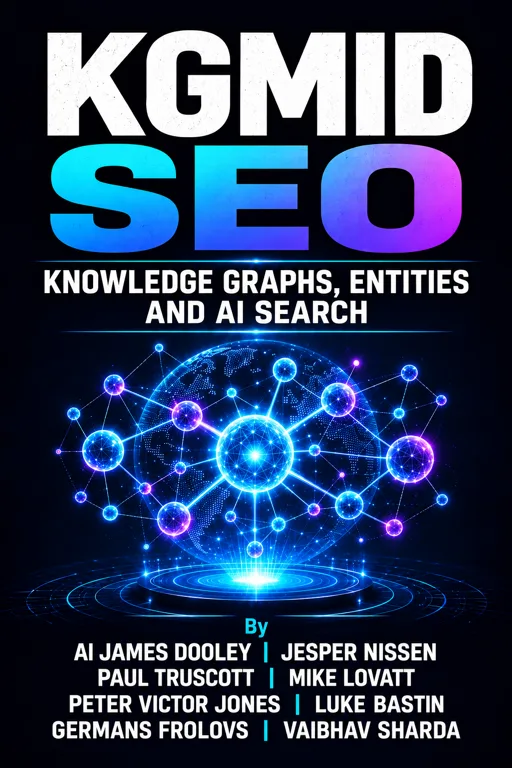
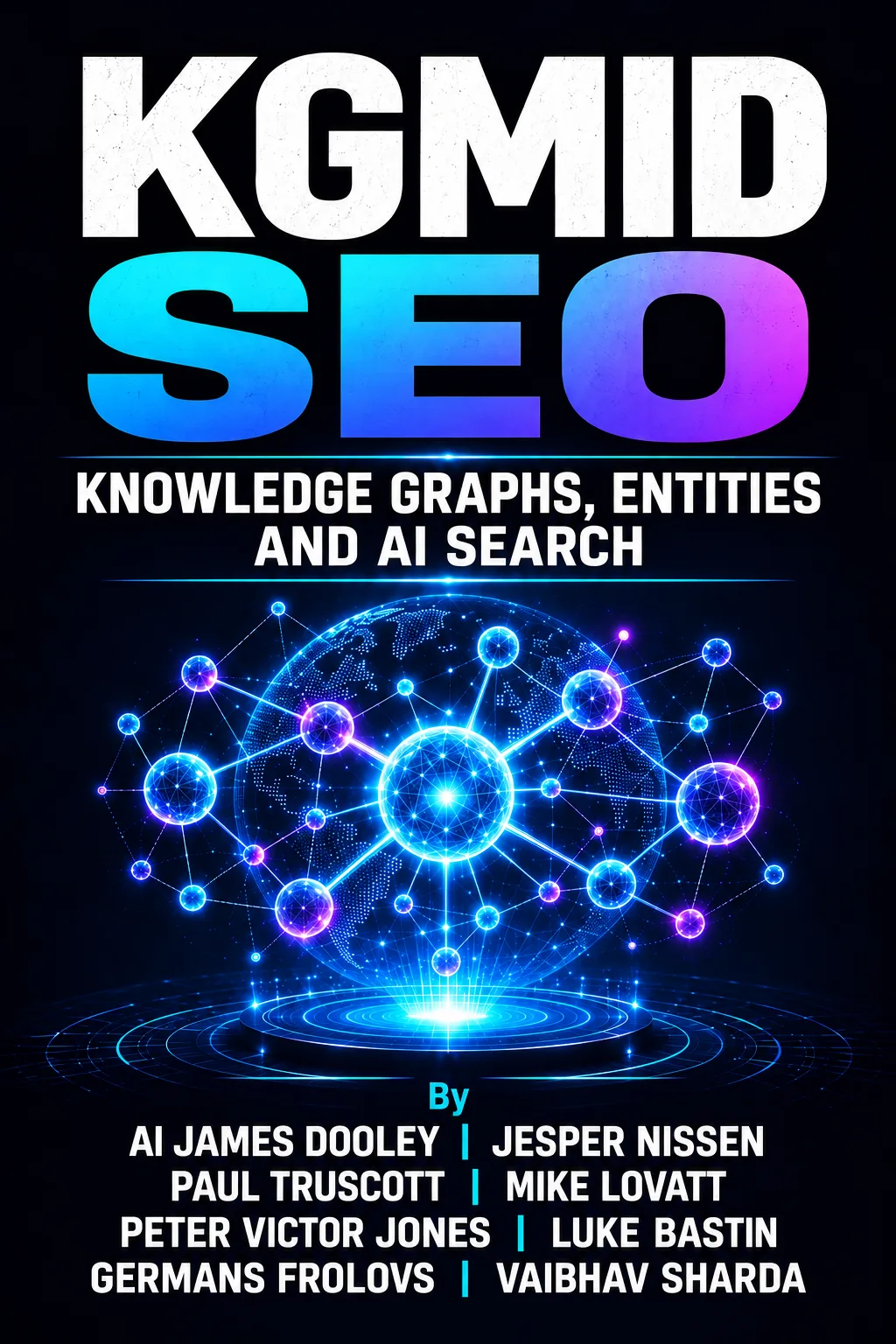
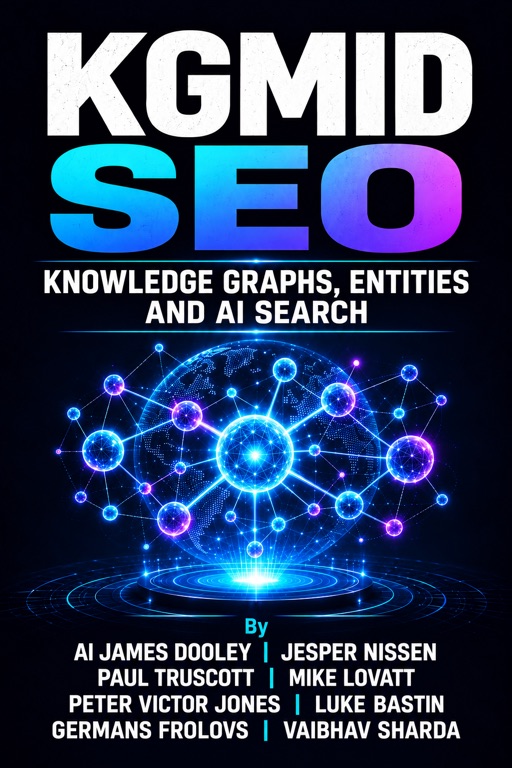
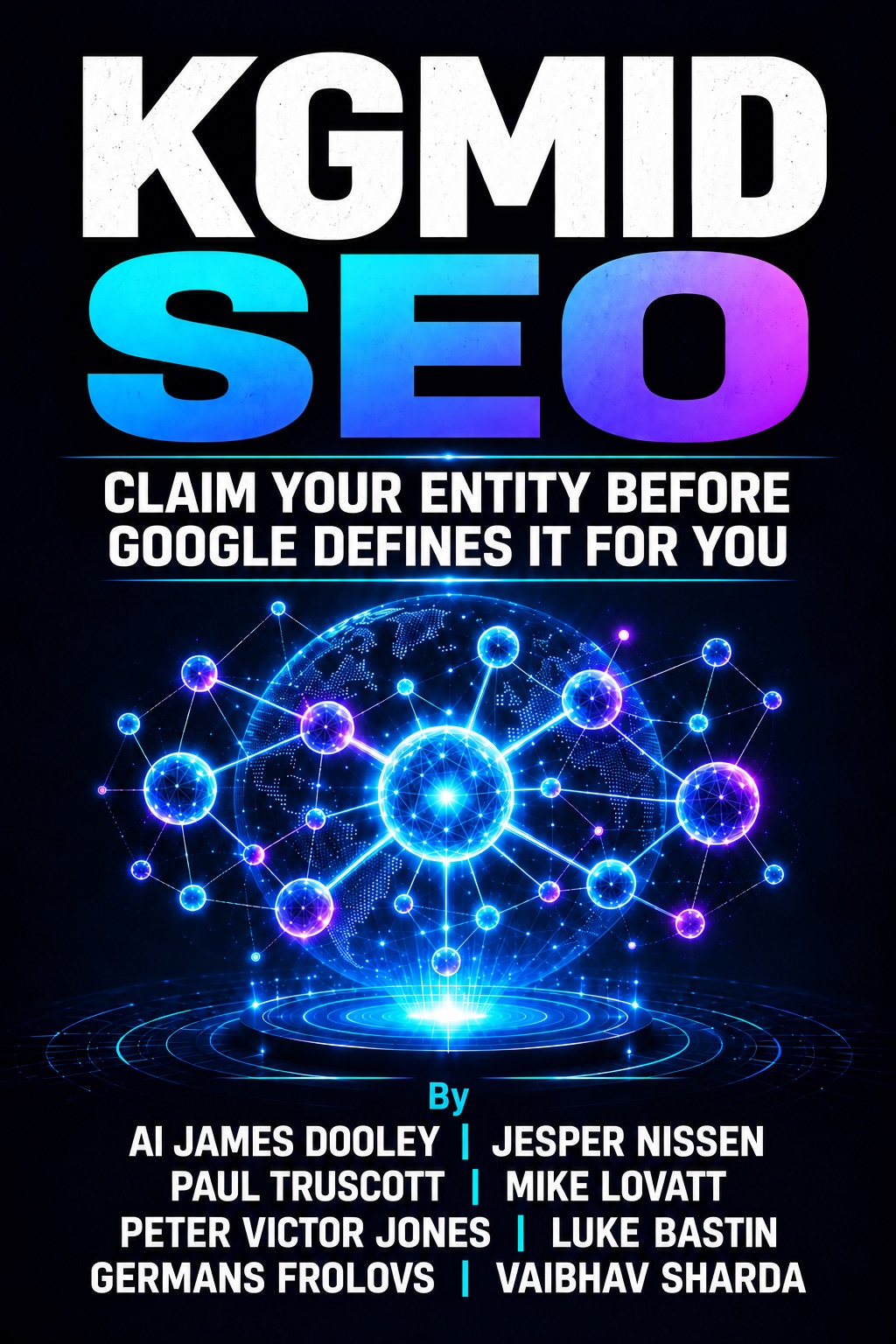
Alt text for the cover, ready to use: Front cover of KGMID SEO, showing a glowing network of linked nodes over a wireframe globe on a near-black ground, with the subtitle Knowledge Graphs, Entities and AI Search and the four author names beneath
Author photographs are listed separately, one per author with its own dimensions and provenance, on the media kit.
Reuse terms: to supply The cover artwork was produced for Omnipressent, and each author photograph was supplied by that author or taken from their own site. No reuse licence has been agreed in writing yet, so ask before publishing rather than relying on this page.
Who should the press contact?
Press enquiries about KGMID SEO: Claim Your Entity Before Google Defines It for You go to Omnipressent at hello@omnipressent.com.
- Organisation
- Omnipressent
- Telephone
- to supply
- Country
- GB
Two further pages carry anything this one does not. The media kit holds every image and profile, and the single source of truth holds every canonical string, including which names may never be varied.